> For the complete documentation index, see [llms.txt](https://docs-en.dydu.ai/llms.txt). Markdown versions of documentation pages are available by appending `.md` to page URLs; this page is available as [Markdown](https://docs-en.dydu.ai/integration/channels/connector/meta/whatsapp.md).
# WhatsApp
Make your bot available on WhatsApp
## **Prerequisites**
To make your **Dydu bot** available on **WhatsApp**, you must have the following:
* A **Meta application** created from the **Meta for Developers** interface.
* The **WhatsApp application** installed on your **phone** or **computer**.
* A **phone number** dedicated to **bot testing**.
## **Step 1: Add the necessary products for WhatsApp**
To make your **application** work on **WhatsApp**, you need to **add** and **configure** the following **products**:
* **Facebook Login for Business**
* **WhatsApp**
#### **Procedure:**
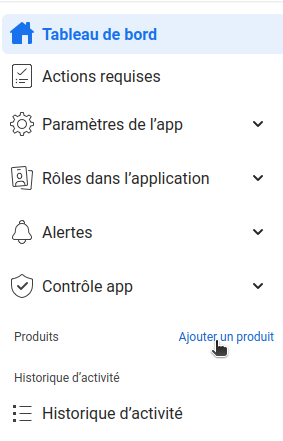
1. Click on **“Add a product”** in the **Meta for Developers** interface.
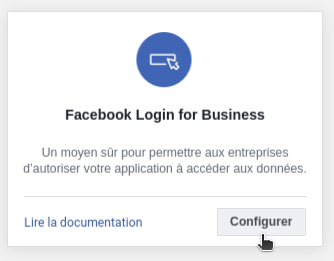
2. Search for the **“Facebook Login for Business”** product and click **“Set Up”**.
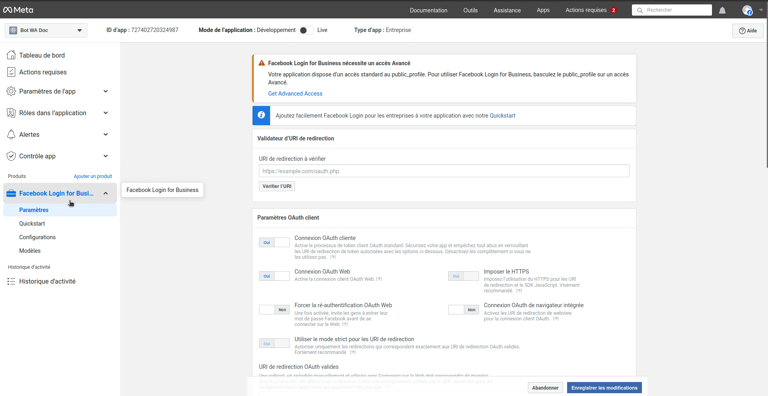
3. The **Settings page** for **Facebook Login for Business** will open, and a new **“Facebook Login for Business” section** will appear in the **left-hand menu**.
4. Go back to the **Products page** by clicking **“Add a product”**.
5. Search for **“WhatsApp”** and click **“Set Up”**.
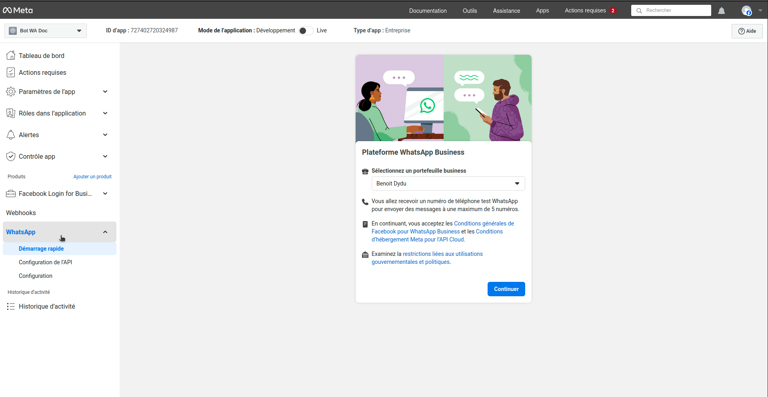
6. The **Settings page** for the **WhatsApp** product will open, and a new **“WhatsApp” section** will appear in the **left-hand menu**.
Your **products** have been **successfully added**! We will now proceed with their **configuration**.
### **Configure the Facebook Login product**
#### **Procedure:**
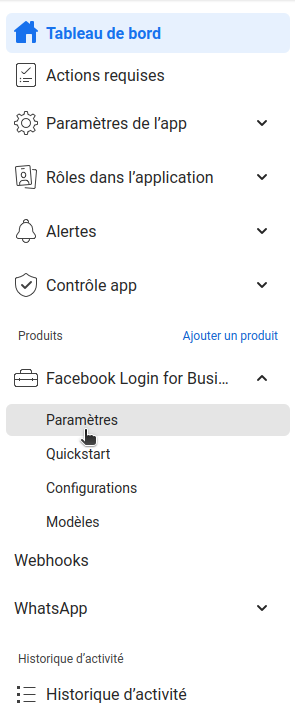
1. Click on **Facebook Login for Business > Settings**.
2. Enable the option **“Login with the JavaScript SDK.”**
* This option allows you to **sign in to your Facebook account** from the **integration in Dydu’s Channels menu**.
3. Fill in the field **“Allowed Domains for the JavaScript SDK”** with the **main URL** of your **Channels menu**.
* The **URL** can be found in the **web inspector console** (accessible with **F12**) when loading the **Channels menu**, and it should look like this:
>
### **Configure the WhatsApp product**
#### **Procedure:**
Before adding your bot’s **final phone number** and generating a **permanent access token**, start by validating the configuration with a **test number** provided by **Meta** and a **temporary access token**.
To do this:
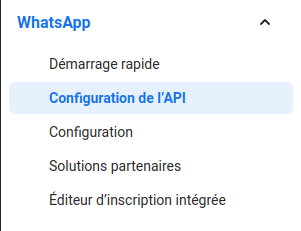
1. Click on **WhatsApp > API Setup**.
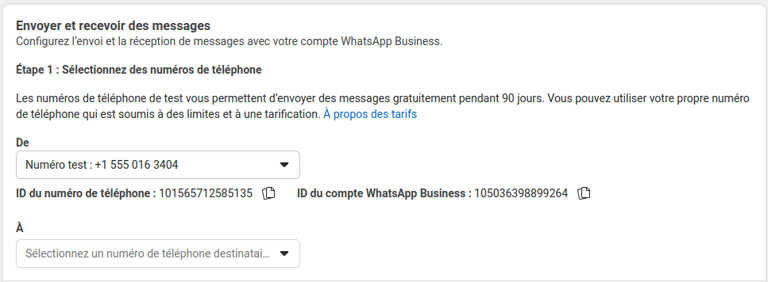
2. To add a **test number**, go to **Step 1: “Select phone numbers.”**
3. Click on the **“From” dropdown menu.**
4. Choose the **test number** provided by **Meta** (**“Test Number”**).
5. Click on the **“To” dropdown menu.**
6. Choose a **phone number** from the list. If no number is available, you can add one by clicking **“Manage phone number list.”**
You can now move on to the next step: **create and configure a Meta integration** from the **Channels menu** in **Dydu’s BMS**.
## **Step 2: Configure WhatsApp from the Channels menu in Dydu’s BMS**
To create a **Meta integration** in **Dydu’s BMS**, follow these steps:
* Obtain your **Meta application ID** and its corresponding **key**.
* Obtain your **bot’s phone number ID** and its **access token**.
This information is specific to your **Meta application** and is available on your **Meta for Developers portal**.
### **Find your Meta application ID and key**
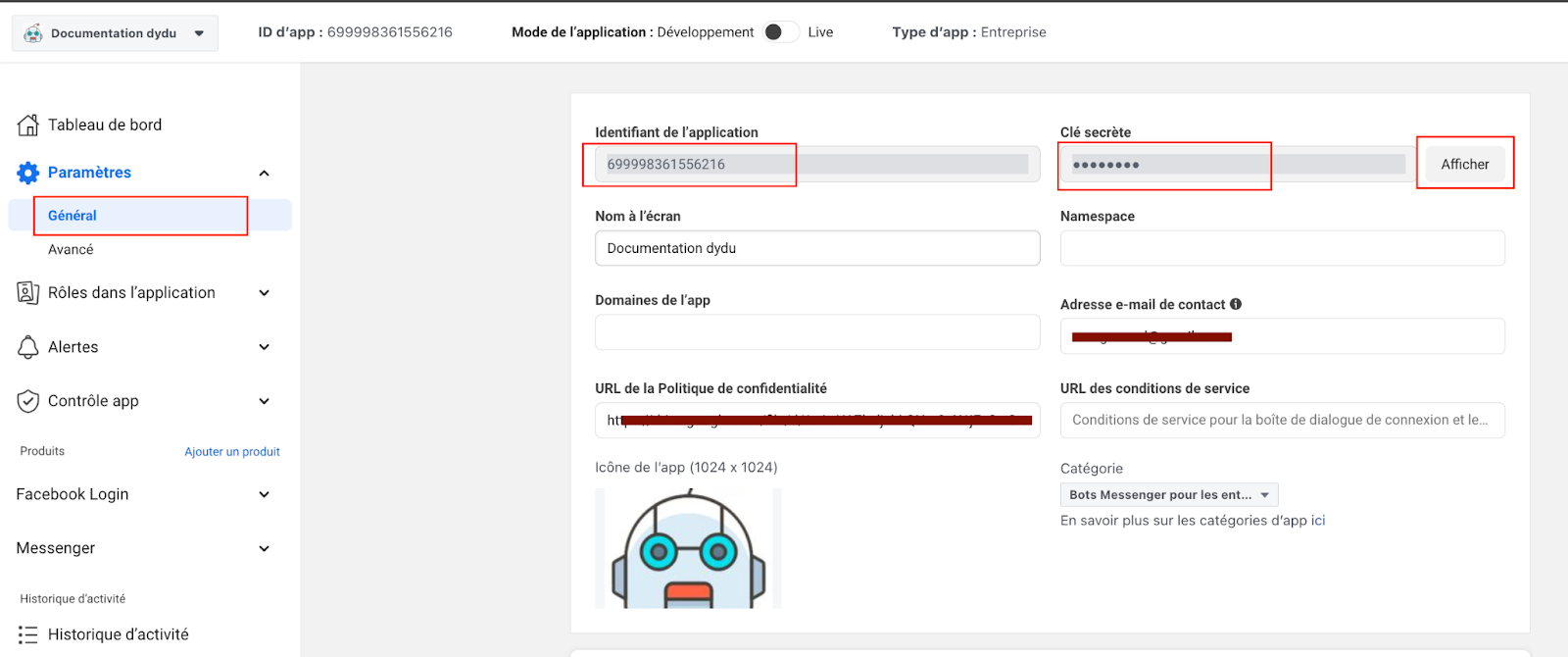
1. In the **Meta for Developers** portal, open your **application**, then click **Settings > General** in the **left-hand menu**.
2. Copy and keep your **application ID**.
3. Click the **“View”** button to display your **application key** — you will be asked to **enter your password** to view it.
4. Copy and keep your **application key** safely.
### **Find the phone number ID and access token**
1. Click on **WhatsApp > API Setup** in the **left-hand menu**.
2. Locate the **“Access Token”** section.
3. Copy and keep this **token**.
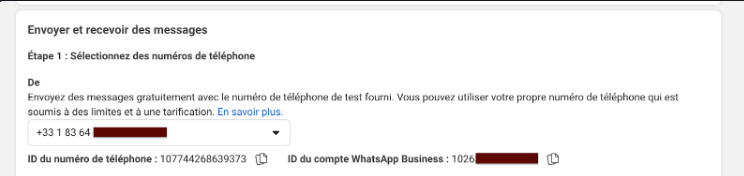
4. Go to **Step 1: “Send and receive messages.”**
5. Under your **phone number**, you’ll find the **“Phone Number ID.”** Copy and keep this **value** securely.
### **WhatsApp configuration in Channels**
With this information, **log in** to your **Dydu BMS** and open your bot’s **Channels menu**.
If you already have a **Meta-type integration**, go directly to **Step 9**.
1. Select the **Meta platform**.
3. Give a **name** to this **integration** and click **“Create.”**
4. You’ll arrive on the **“Information”** page, where you can select the **language** and the **space** that will be used by your **bot on WhatsApp**.
5. Copy and keep the **endpoint**
6. Click the **“Next”** button.
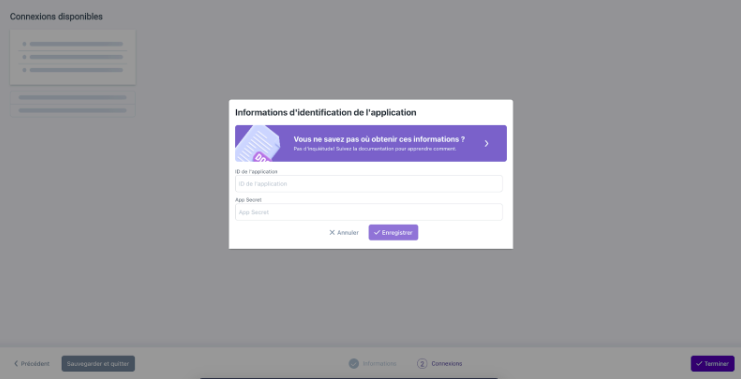
7. A **modal window** will open — enter your **Meta application ID** and **application secret key**.
{% hint style="info" %}
These **details** were previously retrieved from your **Meta for Developers** portal.
If you skipped that step and don’t know how to find your **application ID** and **secret key**, we explain it [**here**](#find-your-meta-application-id-and-key)!
{% endhint %}
8. Once the information is provided, click **“Save.”**
9. You’ll be redirected to the **“Connection”** page.
10. On the left, you’ll see the **available connections**. Click **“Create”** next to **WhatsApp** to **connect your Dydu bot** to your **WhatsApp account**.
11. A **new tab** will open asking you to **log in**.
12. **Log in** and **confirm**.
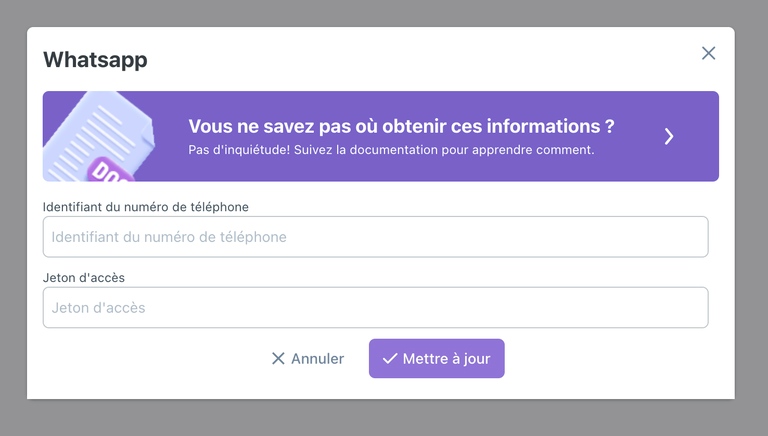
13. You will then be **redirected** to your **integration configuration** in the **Channels menu**. A **“WhatsApp” modal** will appear.
11. Check for which elements you require access authorization and click on “Save”
12. A message confirming the association of your WhatsApp account with your Meta integration is displayed: click on the “I understand” button.
13. You are then redirected to the configuration of your integration from the Channels menu. A “WhatsApp” modal is opened.
14. Fill in the **phone number ID** and the **access token**.
{% hint style="info" %}
These details were previously retrieved from your **Meta for Developers** portal.
If you skipped that step and don’t know how to find your **page ID** and **access token**, we explain it [**here**](#find-the-phone-number-id-and-access-token)!
{% endhint %}
15. Click **“Update.”**
16. Your **WhatsApp connection** is now set up!
17. Click **“Finish.”**
Your **bot** is now **available on WhatsApp**, but it is only **accessible** to the **phone numbers** you added during the **WhatsApp product configuration** in your **Meta for Developers portal**.\
Additionally, the **token** generated is **valid for 24 hours** after its creation (it can be **renewed** as many times as needed).
To make your bot **available to all WhatsApp users** without any time limitation, you must:
* Add your **own WhatsApp phone number**,
* Generate a **permanent token**.
## **Step 3: Use WhatsApp with your own configuration**
### **Add your own phone number**
1. Go back to the **Meta for Developers** interface.
2. To add your **phone number**, go to **WhatsApp > API Setup**.
3. Go to **Step 5: “Add a phone number”** and follow the instructions.
4. Go to **Step 6: “Add a payment method”** and follow the procedure.
{% hint style="info" %}
Since **business-initiated conversations** are **paid**, you’ll be asked to provide a **payment method**.
**Meta** provides detailed **pricing conditions** on its website. To learn more, please visit the **dedicated page** on **Meta’s official site**.
{% endhint %}
### **Generate a permanent token**
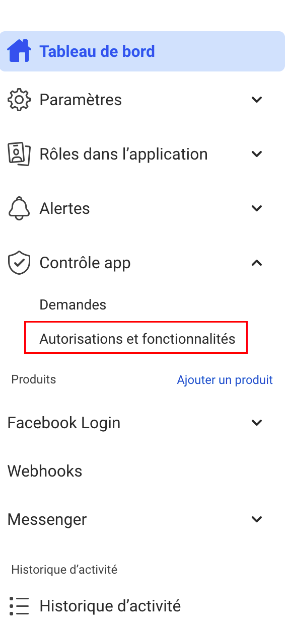
Click on **App Control > Permissions and Features** in the **left-hand menu**.
To create a **permanent token**, **Meta** provides **online documentation** explaining all the necessary steps — you can find it [**here**](https://developers.facebook.com/docs/whatsapp/business-management-api/get-started#1--acquire-an-access-token-using-a-system-user-or-facebook-login).
Once these **permissions** are granted, you can switch your **application** to **“Live” mode**.